
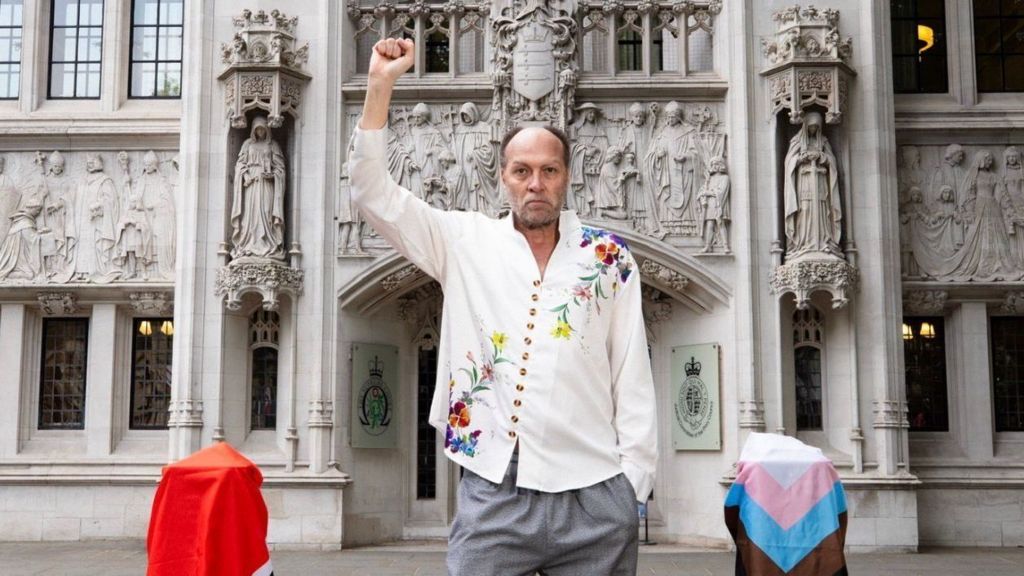
London's Judicial Committee of the Privy Council, serving as the final appellate court for Trinidad and Tobago, has invalidated legislation that criminalized same-sex relationships on the Caribbean island, concluding the statutes violated fundamental rights to privacy regarding family and personal life.
The ruling concludes an eleven-year judicial dispute initiated by Jason Jones, a sixty-two-year-old dual citizen who expressed his desire for the outcome to advance the broader pursuit of complete equality.
Although Jones previously prevailed against the legislation within the High Court of Trinidad in 2018, that decision was subsequently reversed following an appeal by the national government.
This marks the initial instance where the Judicial Committee of the Privy Council has issued a ruling to decriminalize same-sex relations, with activists anticipating it may catalyze comparable legal victories across other Commonwealth nations.
Before this ruling, Trinidad and Tobago represented one of approximately thirty-four Commonwealth states maintaining laws originating from the British colonial era that penalize homosexuality.
Such regulations mandate prison sentences for consenting same-sex behavior, with certain provisions allowing for capital punishment.
The Attorney General of Trinidad and Tobago contended that the legislation remained shielded from judicial scrutiny through savings law clauses, which preserved legacy British statutes during the transition of territories into sovereign states.
Counsel representing Jones countered that the statutes breached personal privacy rights and asserted that legislative amendments enacted in 1986, which imposed harsher penalties, nullified the applicability of those savings clauses.
The judicial panel reached a unanimous decision supporting Jones.
During the announcement of the verdict, Lord Sales stated that the regulations could not be deemed reasonably justifiable within a society that properly honors individual freedoms and rights.
Appellant and human rights advocate Jason Jones stated that these laws never represented the multiracial, secular, and diverse identity of their society, adding that the message branding LGBTQ+ individuals as criminals in their native country concludes immediately.
Anand Ramlogan SC, legal counsel for Jones, characterized the ruling as a historic milestone for gay rights, equal dignity, and the protection of private and family life within Trinidad and Tobago.