
Federal Reserve policymakers are widely expected to leave their benchmark interest rate unchanged on Wednesday at the conclusion of their meeting, while financial markets and economists analyze the central bank statement for indications on future policy and inflation trends.
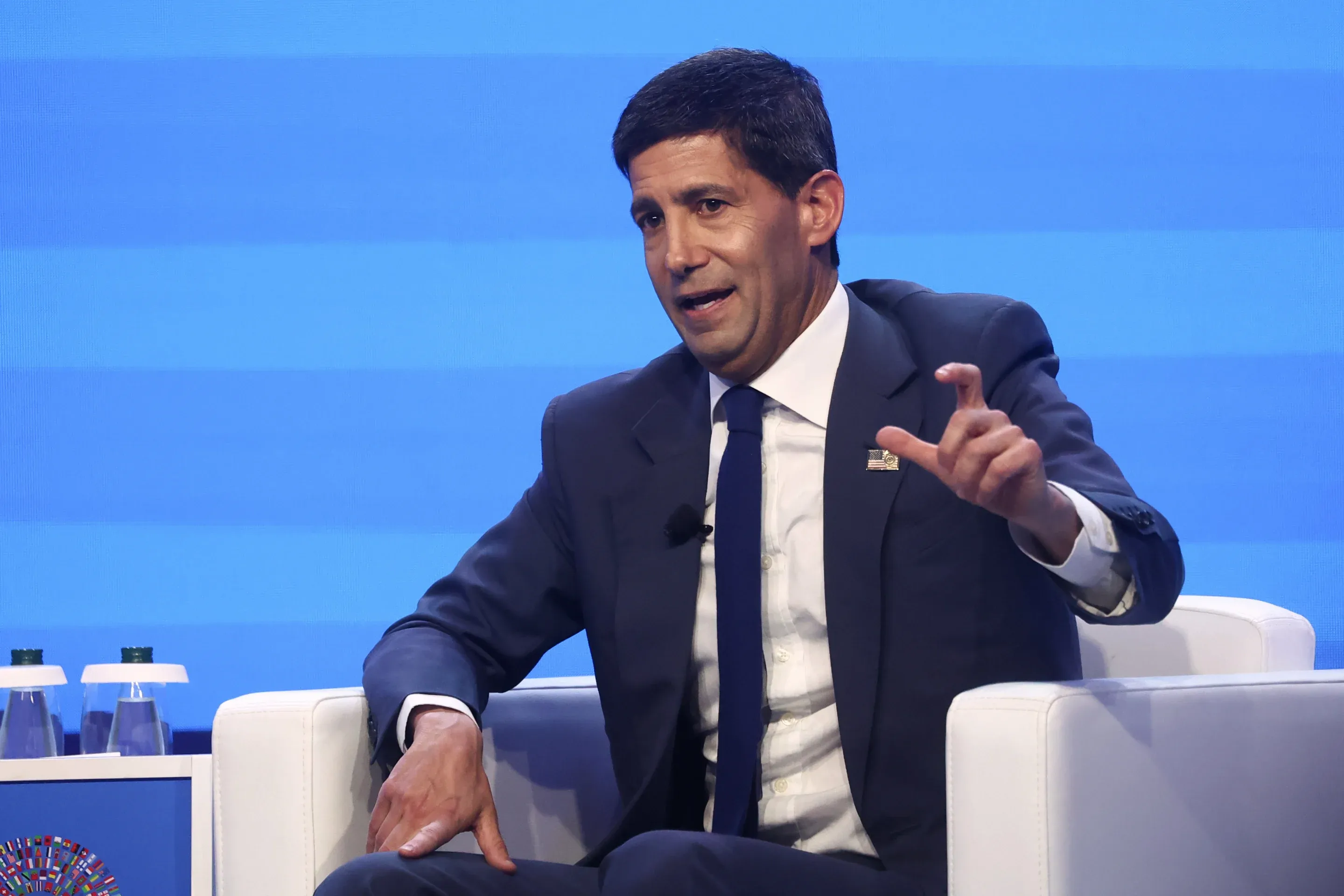
The Oct. 27-28 gathering marks the fourth meeting under Chairman Kevin Warsh, whose leadership has faced scrutiny regarding his autonomy from President Donald Trump, who appointed him earlier in the year. The meeting also takes place six days prior to midterm elections heavily influenced by cost-of-living concerns, including elevated grocery prices and soaring gas costs.
Consumers also face steep mortgage rates, with the average 30-year mortgage hitting a three-year high of 7.4% earlier this month before declining slightly to 7.32% last week, compared to just under 6.2% a year ago. Oxford Economics calculates that these sharp increases have priced another 5 million households out of the housing market, and further monetary tightening by the Fed could drive borrowing costs even higher.
Amid these dynamics, several key elements warrant attention during the upcoming Fed announcement.
Although hotter-than-expected inflation figures last month led Wall Street investors and some economists to anticipate a quarter-point rate increase to roughly 4.1%, several senior officials on the rate-setting committee have recently downplayed the likelihood of an October hike. Current futures pricing indicates virtually no expectation of a change from the existing rate of approximately 3.9%.
Philip Jefferson, vice chair of the Fed board of governors, pointed out that broader financial market interest rates have risen significantly and stated that officials require additional time to reach their own conclusions. Joseph LaVorgna, chief economist at SMBC Americas and a former senior Trump administration official, remarked that the central bank will pause immediately ahead of the election to avoid direct conflict with the White House.
Comments from Jefferson and other officials have raised questions concerning one of Warsh's primary goals: his opposition to forward guidance, the explicit signals regarding future policy provided by previous chairs. Warsh has argued that such guidance binds the central bank to a predetermined path and restricts its flexibility in responding to incoming economic data.
However, recent speeches by top officials closely resembled traditional forward guidance, prompting debate among economists. Aditya Bhave, head of U.S. economics research at Bank of America, noted that if Warsh endorsed these messages, it would undermine his stated aversion to forward guidance, whereas a lack of alignment could potentially lead to a surprise policy move.
At the September meeting, Warsh surprised observers by defying President Trump's preferences and supporting a rate increase, alleviating prior concerns from lawmakers such as Senator Elizabeth Warren that he would act as a presidential surrogate. Trump had previously stated he would only appoint a Fed chair who favored lowering rates.
James Knightley, chief international economist at ING, stated that the September decision largely reassured markets. Nonetheless, Trump has continued efforts to remove Fed governor Lisa Cook, which, if successful, would create another vacancy for the administration to fill following a Supreme Court block in June.
Furthermore, Trump stated after the previous meeting that he had informed Warsh in advance that he might as well vote for a rate hike given public comments from other officials, characterizing the committee as hostile and political. While Warsh declined to comment on communications with the president, economist Derek Tang of Monetary Policy Analytics noted that questions regarding the chairman's independence persist.
Inflation has exceeded economist projections for two consecutive months, amplifying worries that rising energy costs will permeate the broader economy. Diesel fuel reached a record $6.53 in late September and stood at $6.35 recently, driving up shipping expenses for goods ranging from groceries to automobiles.
Bhave observed that inflation has not reached the Fed's 2% annual target for a full calendar quarter since late 2020. Should Warsh emphasize that inflation remains excessively high and requires a more timely return to the 2% target, investors may interpret the remarks as a signal of a potential rate increase at the December meeting.
The September rate hike was approved unanimously, but market analysts anticipate two or three dissenting votes among the 12 voting officials this week. Cleveland Fed President Beth Hammack and Dallas Fed President Lorie Logan are viewed as the most probable candidates to support a rate increase due to concerns that current borrowing costs are insufficient to cool the economy.