
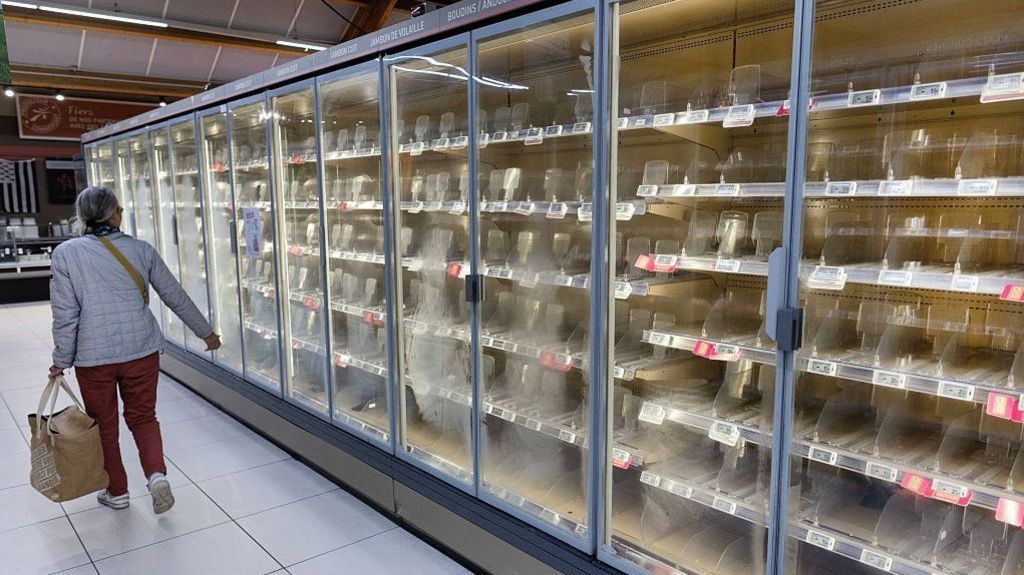
France has formally blamed Iran's Islamic Revolutionary Guard Corps for orchestrating cyber-attacks that manipulated the temperatures of supermarket refrigeration units.
French Foreign Minister Jean-Noel Barrot described the operation as unprecedented in scale and aggression, stating that the perpetrators will face European-level sanctions. Iran has not yet replied to these accusations.
The incident last month affected hundreds of French supermarkets, where raised temperatures in fridges and freezers destroyed millions of euros worth of fresh and frozen goods.
Last week, similar cyber-attacks impacted dozens of supermarkets in other European nations, though a connection between the events remains unverified.
Barrot stated that the assault on French supermarkets represents the initial large-scale sabotage cyber-attack on national soil, posing a significant threat to national interests and public security.
The government summoned the Iranian ambassador in Paris to formally register a strong protest regarding the severe incident, Barrot noted.
France intends to pursue additional proportionate measures to address the event and deter future occurrences, according to the foreign minister.
On Monday, the Paris prosecutor announced an ongoing investigation targeting the commander of an offensive cyber unit linked to the Islamic Revolutionary Guard Corps alongside his two deputies.
Laure Beccuau identified the unit as Shahid Kaveh, noting its connection to the electronic and cyber division of the Islamic Revolutionary Guard Corps.
Shahid Kaveh designates a hacking network suspected of direct employment by the Iranian government.
Hackers seized control of temperature-regulating software for supermarket refrigeration units on 11 October.
Over 100 Coopérative U stores and 180 Intermarché and Netto locations suffered impacts, with nighttime temperatures reportedly reaching 50C in certain stores.
Additional major food retailers such as Carrefour, Monoprix and E.Leclerc also experienced the attack, which affected software supplied by Danish engineering company Danfoss.
Retailers utilize this software for remote management of their refrigeration systems.
A subsequent wave of hacks occurred earlier this month, impacting more than 100 European stores.
Stores in Belgium and Luxembourg experienced disruptions, alongside a limited number of locations in Sweden, Ireland, the Netherlands, Estonia and Finland.
Reuters sources previously indicated that refrigeration malfunctions spoiling food at a small number of United States military bases in August are also under investigation as intentional cyber-attacks.
Following the freezer attacks, specialists debated potential responsible hacking groups, keeping Iran among the primary suspects.
Despite two pro-Russian hacktivist groups claiming responsibility on Wednesday, skepticism remains widespread.
The French government did not disclose the methodology used to attribute the cyber-attacks to Iran, given the inherent difficulty of tracing hackers who conceal their locations.