
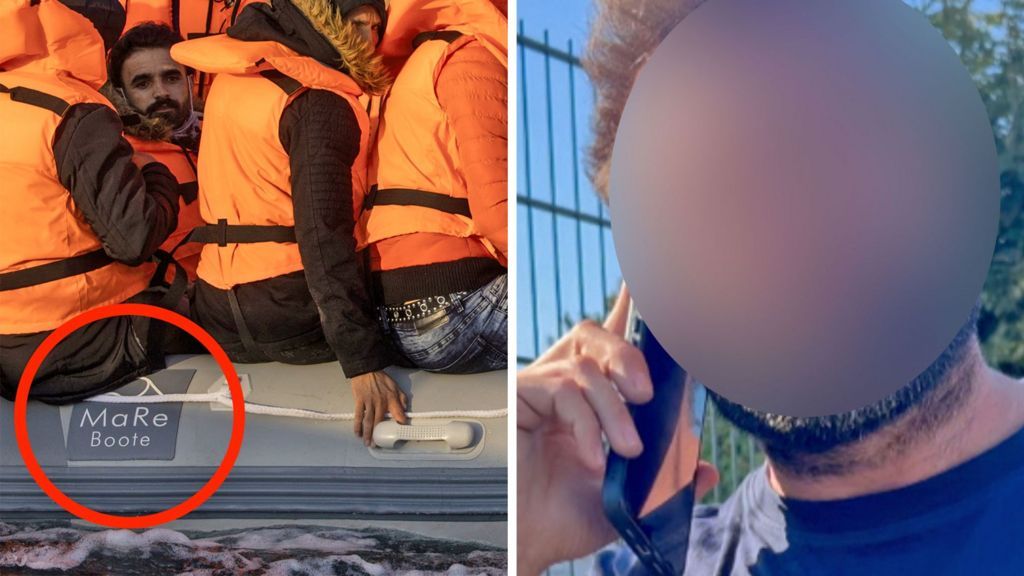
European law enforcement authorities suspect a German boat retailer of serving as a primary provider for migrant smuggling organizations operating across the English Channel, according to findings obtained by the BBC. Case files reviewed indicate that nearly a third of small-boat migration attempts during the first four months of this year involved watercraft or motors originating from MaReBoote, a small enterprise located in western Germany. Managing director Marvin Reuter is currently fighting extradition to France, where potential accusations include smuggling, criminal association, and involuntary manslaughter. Authorities connect his merchandise to two separate fatal incidents that resulted in the deaths of four individuals. When reporters approached the thirty-five-year-old at his enterprise close to Dortmund, he declined to respond to inquiries and stated he was contacting law enforcement.
Reuter cannot face formal charges until transferred to French custody, though a conviction could carry a prison sentence, and he maintains the presumption of innocence. The BBC conducted the review alongside German outlets WDR and NDR, the Süddeutsche Zeitung, and the French publication Le Monde, analyzing numerous law enforcement, judicial, and tax records while blurring Reuter's likeness to comply with German privacy regulations. Investigators report establishing persistent connections between Reuter and smuggling syndicates through the admissions of suspected accomplices, secret recordings from prison cells concerning an alleged ringleader, and the investigation into the two deadly crossings. French inquiries show that at least 82 watercraft from the firm successfully reached the English shoreline in the period spanning slightly over two years leading up to May. Archival media photographs from five years prior also display the company emblem on inflatable boats packed with migrants. Back in 2021, Reuter expressed frustration and concern to the Sun and Guardian upon discovering his vessels had fallen into the possession of smugglers, at a time when German police maintained that selling legal goods did not make a merchant responsible for criminal misuse abroad.
French prosecutor Samuel Finielz refrained from discussing investigative specifics but verified that a European Arrest Warrant targets the leader of a German enterprise. Issued in May of this year, the warrant pertains to alleged offenses originating in December 2024. Finielz noted that while vessel sales remain entirely legal, they cross into illegality when conducted with full knowledge that the merchandise will support networks engaged in human trafficking or unlawful migration. Documentation indicates that German officials learned from British counterparts that 29 percent of detected crossings up to late April featured equipment tied to the business. Five additional suspects have faced charges in France thus far, comprising one Iranian individual, three Iraqi nationals, and one Syrian person.
Among the fatalities linked to the equipment was a young Syrian man named Suliman al Husein, who would have turned twenty around the time of his death. Records indicate he suffered cardiac arrest following a likely crushing incident on an overloaded dinghy during an aborted launch west of Calais in January 2025, marking the first Channel migrant death of that year. His remains were discovered inside a boat allegedly bearing the company logo. The case against Reuter additionally developed from an incidental traffic stop conducted by French police near Boulogne-sur-Mer involving a German-registered BMW towing a trailer. Officers noted the vehicle speeding past traffic during the early hours of a May morning, and a subsequent search revealed fuel containers, a motor, pumps, and a rolled inflatable vessel. Interrogation protocols revealed the two German occupants claimed they received up to 1,000 euros per trip to deliver supplies to individuals along the coast, with one stating that financial gain caused him to overlook the illegal nature of the activity. Both men received convictions for smuggling and reportedly identified Reuter as their employer and payer, with both the car and cargo displaying company branding.
Reuter faced arrest in Germany in May before gaining release pending extradition proceedings, and authorities simultaneously seized over 30 dinghies and 9,000 life vests allegedly linked to him from a secure warehouse location. Additional evidence emerged from intercepted communications within a French holding facility, where an inmate discussed acquiring marine gear from a German business operated by an individual sharing the suspect's given name, alongside the discovery of the company address on a phone. Confronted last month at his place of business in Werne, North Rhine-Westphalia, Reuter told staff to depart before returning briefly to state he was summoning the police without answering questions. Written requests for comment yielded no response to specific accusations, though legal representatives subsequently challenged extradition on grounds of French prison overcrowding, arguing any trial should occur in Germany.
Legislative changes enacted late last year rendered assisting UK-bound smuggling explicitly illegal in Germany following previous journalistic exposés regarding the nation's role as a logistics center, utilizing new powers to seize the equipment associated with Reuter. Although small-boat arrivals decreased notably in 2026 alongside broader declines in European irregular migration, British authorities view enforcement as critical. Dan Cannatella-Barcroft, deputy director for organized immigration crime at the UK National Crime Agency, commended German cooperation while noting the country remains a vital transit territory due to its geographic location, transport infrastructure, and the presence of regional smuggling cells primarily sourcing equipment manufactured in China and transported via Turkey.