
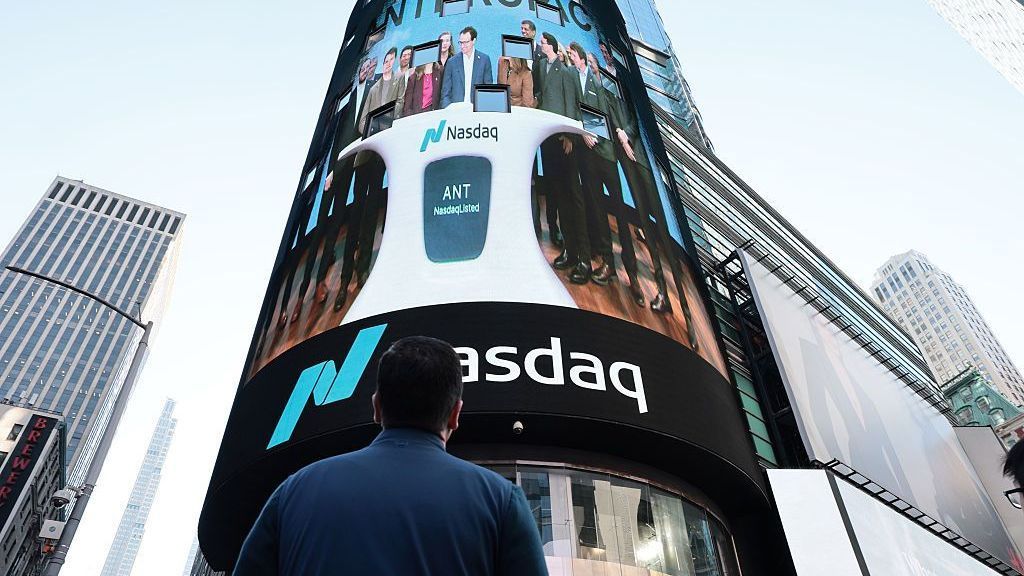
Anthropic shares retreated toward their initial value following a strong debut on the stock exchange, driven lower by a broader technology sector sell-off that impacted global markets. This downward trend reflects ongoing worries regarding the scale and pace of artificial intelligence funding, alongside specific challenges affecting major firms such as Nvidia and SpaceX that unsettled market participants. These combined pressures exerted downward force on United States markets through Friday, resulting in steep losses for all major US indexes at the close and extending earlier weekly declines. The S&P 500 and the Dow Jones Industrial Average both entered correction territory, defined as trading at least 10% below a recent peak. The S&P 500 finished down 3.7%, the Dow Jones Industrial Average dropped 1.9%, and the technology-focused Nasdaq Composite Index fell 5.3%, though all three indexes remained higher compared to the same period a year prior. Rapid growth in artificial intelligence spending, exceeding $1 trillion over the past year by a select group of major technology enterprises, has sustained fears of a financial bubble and generated uncertainty regarding the timing and reality of returns on investment. Investor anxiety was also heightened following the Democratic party victory in the US midterms in early November, which raised concerns about potential limits on artificial intelligence advancement. Despite a successful initial trading session, Anthropic stock declined on Friday, falling by over 12% at one point to approximately $85, nearing its initial public offering price of $83, and finished the day down 8.5% to erase half of its Thursday gains. The artificial intelligence company made its debut on the Nasdaq exchange on Thursday in a vital test for the sector, opening at $111.50 before settling 17% higher at $97.17 at the close. Market analysts indicated that early volatility was anticipated during the opening days and weeks of trading for Anthropic, as the business represents the initial frontier artificial intelligence enterprise to list publicly and lacks direct competitors. Observers also drew parallels to Elon Musk's SpaceX, which held the record for the largest initial public offering when it debuted in June, noting that the shares of the rocket and artificial intelligence enterprise experienced substantial fluctuations during its initial weeks of trading. AlphaSense market strategist Ed Moya stated that the significant initial public offering by Anthropic failed to revive overall market confidence in the artificial intelligence sector. Moya noted to the BBC that while artificial intelligence demand remained robust, investors were questioning the appropriate valuation for that expansion. As we've gone through the past past few weeks, it seems that there's been more risks that have surfaced, he said, adding that Wall Street was moving away from rewarding growth at any cost toward requiring better cash flow and a clearer route to profitability. Equities across several prominent US technology enterprises also declined on Friday amidst the ongoing market downturn. Nvidia shares dropped 13.7% by the end of the session following Reuters reports, not confirmed by the BBC, regarding a US Securities and Exchange Commission inquiry into the company accounting methods. Shares in Musk-affiliated companies Tesla and SpaceX both declined by more than 7.6%, with SpaceX experiencing pressure after disclosing a bond issuance to fund what it described as the largest acquisition of Nvidia processors on record. Technology equities experienced declines more broadly across the board. Meta finished lower by more than 5%, Amazon fell over 4%, and Apple and Alphabet recorded more modest reductions. Major European equity exchanges, which feature a lower concentration of technology companies, also declined. Germany's Dax index dropped 2.6%, the French CAC 40 decreased 1.9%, and the UK FTSE 100 concluded trading 1% lower. Earlier on Friday, technology-focused Asian equity markets experienced sharp decreases. The South Korean Kospi and Japanese Nikkei 225 indexes both finished lower by approximately 5%, with memory semiconductor producers SK Hynix, Kioxia, and Tokyo Electron, alongside enterprises like Samsung Electronics, experiencing reductions. The Taiwanese stock exchange fell roughly 6% on Friday, bringing its weekly loss to over 17% in what reports indicated was its largest weekly decline since 1990.
World
Global Tech Share Decline Pulls Down Major Markets Following Anthropic Volatility
20 November 2026, 14:36
1094