
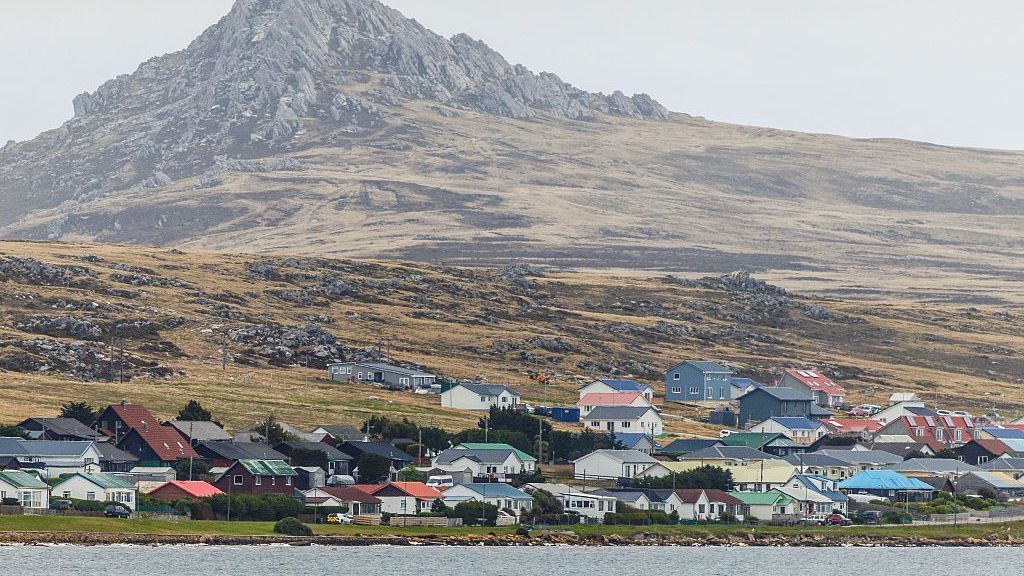
An international tribunal supported by the United Nations has dismissed a legal challenge from Argentina seeking to halt an oil exploration project close to the Falkland Islands.
autoridades in Buenos Aires had demanded the suspension of the Sea Lion development, arguing that an unresolved sovereignty dispute exists over the Falklands, which are a British overseas territory. The United Kingdom has consistently denied this assertion.
On Saturday, the head of the International Tribunal for the Law of the Sea announced that the judicial body lacked the proper jurisdiction to adjudicate matters of sovereignty. The ruling was confirmed by an 18 to 3 vote.
Following the verdict, Argentinian President Javier Milei stated that the ruling did not represent a final conclusion and reiterated that the territory belongs to Argentina.
In a joint statement, UK Foreign Secretary Ed Miliband and Attorney General Ellie Reeves asserted that Buenos Aires must acknowledge the right of the islanders to decide their own future.
They stated that Argentina attempted to prevent the residents from making sovereign choices and failed, while calling on the nation to cease its broader economic pressure against the territory.
This legal dispute marks the latest diplomatic friction between the two nations, which engaged in a 74-day conflict over the islands in 1982.
The Sea Lion deposit lies approximately 130 miles or 209 kilometers from the Falkland Islands and holds an estimated 1.7 billion barrels of crude.
British firm Rockhopper Exploration and Israeli company Navitas Petroleum plan to commence extraction operations within two years, a move that could yield substantial financial gains for the approximately 3,500 local residents.
However, the government in Argentina argued that the marine environment in contested maritime zones is safeguarded by international law, maintaining that no actions should alter the current situation while a territorial disagreement persists.
The UK countered that the maritime court held no authority over the matter and that suspending the project could severely impact the local economy and associated businesses.
The final ruling of the tribunal was based on its jurisdictional limits, determining that sovereignty is a territorial question unsuitable for a maritime court.
Buenos Aires contested this perspective, issuing a statement asserting that it did not request a ruling on sovereignty, but rather the enforcement of UN maritime laws against the UK concerning the utilization of regional resources.
The statement additionally warned that five unnamed individuals would face punitive measures for taking part in the drilling initiative, a threat previously issued by Milei.
The official release emphasized that participants in the unauthorized resource extraction would encounter consequences.
The 1982 conflict began when Argentine troops arrived on the islands to assert a territorial claim, prompting a British military response to remove them.
The war resulted in the fatalities of 255 British service members, three local islanders, and 649 Argentine military personnel.
Despite the historical defeat, Argentina continues to claim sovereignty over the islands, with successive administrations pursuing the matter through various diplomatic and assertive means.
London maintains that sovereignty belongs to the UK and emphasizes the principle of self-determination for the local inhabitants.
In a referendum held in 2013, local residents voted decisively to maintain their status as a British overseas territory, with 99.8 percent supporting the option and only three votes cast against it.