
On Sunday, Iran executed a drone strike targeting a United States military installation in Bahrain, marking its second attempt to strike the nation within a span of three days.
The Islamic Revolutionary Guard Corps of Iran stated that it deployed six drones against the American air defence radar facility situated at the al-Riffa air base in Bahrain.
According to the military of Bahrain, its air defence network intercepted and successfully eliminated the incoming Iranian aerial assaults prior to them reaching their intended targets.
This incident follows an earlier drone launch by Iran directed at Bahrain on Friday, which constituted its initial strike against any Gulf nation since September.
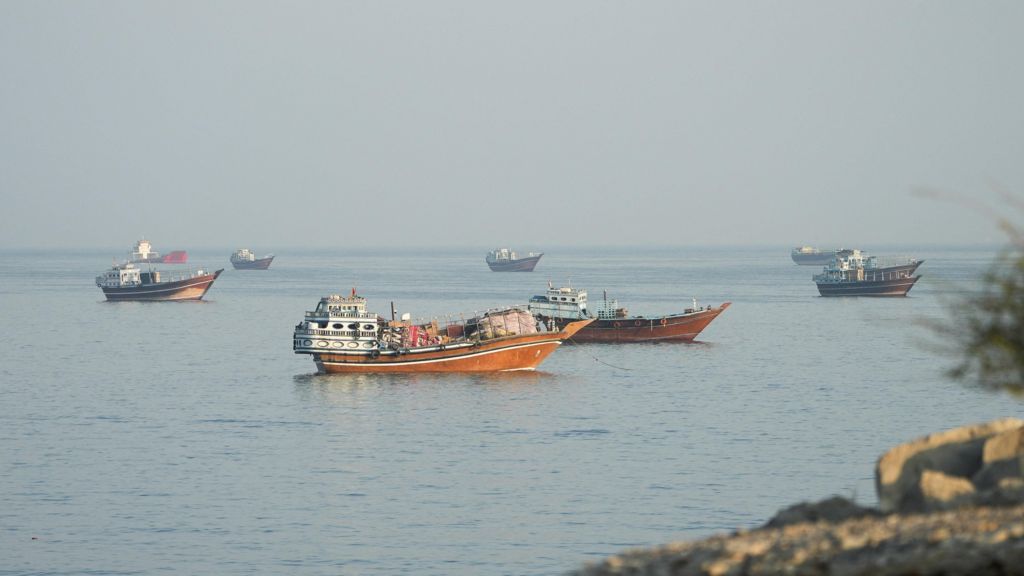
A prolonged standoff persists between the United States and Iran concerning the Strait of Hormuz. Approximately twenty percent of global oil and gas supplies typically transit through this waterway, though maritime navigation has faced limitations since the onset of the conflict in February.
Iran maintains that it possesses the right to govern the strait and has targeted vessels it deems unauthorized, whereas United States armed forces escort oil tankers through the passage to maintain export flows from Gulf Arab nations.
During Sunday's events, air raid sirens echoed across Bahrain, prompting the interior ministry to advise residents to seek shelter at the nearest secure location.
The foreign ministry of Bahrain issued a strong condemnation, stating that the kingdom strongly denounced the ongoing aggressive Iranian assaults on its soil and placed full accountability on Iran for the resulting outcomes.
Via a statement broadcasted on Telegram by state media in Iran, the IRGC declared that the Strait of Hormuz remained closed and warned that any hostile actions by American forces would encounter an even more severe retaliation.
Earlier in the week, the IRGC asserted that it had successfully hit a US early warning radar installation in Bahrain on Friday.
That assertion was refuted by the US military, which reported that the IRGC had dispatched two one-way attack drones toward Bahrain, both of which were intercepted and destroyed by American personnel without causing any casualties or property damage.
Earlier in the week, American officials informed CBS, the BBC's US news partner, that the US military had conducted operations against Qeshm Island located in the Strait of Hormuz.
Described by officials as restricted and defensive measures, these strikes were executed in retaliation against the IRGC firing upon a US aircraft.
Explosions on Qeshm were documented on Monday by the official Iranian news agency Irna. While the IRGC withheld commentary on those blasts, it reported that its personnel had downed two US MQM-170 drones south of the island alongside a US MQ-9 drone situated east of the strait.
An initial accord to halt hostilities and restore shipping access through the strait was reached by the US and Iran in June, but the arrangement dissolved within weeks after maritime attacks resumed and the US reinstituted a naval blockade against Iranian ports.
Discussions had taken place between Iranian negotiators and intermediaries regarding a plan to reopen the Strait of Hormuz within forty-eight hours provided the US satisfied seven prerequisites, which reportedly involved terminating the naval blockade and unfreezing Iranian financial assets.
Nevertheless, US President Donald Trump announced this week that the United States was no longer pursuing an agreement to conclude the conflict with Iran, instructing Vice-President JD Vance, who had previously participated in diplomatic restart efforts, to concentrate on domestic American political matters.