
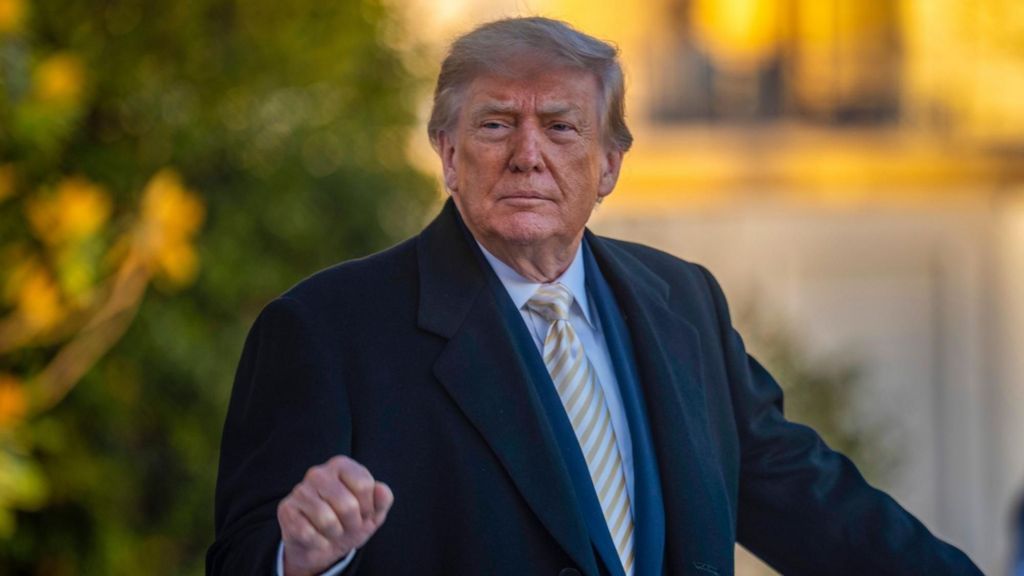
The United States has announced a fresh set of import duties as President Donald Trump advances his core trade strategy.
The upcoming import taxes are positioned to impact several of the nation's primary trading partners, encompassing China, the European Union, and 12 additional jurisdictions like Japan, South Korea, and Taiwan.
The White House initiated investigations into international trade practices in March following a US Supreme Court decision that invalidated Trump's prior Liberation Day tariffs.
China faces the highest proposed tariff rate reaching up to 40%, followed by Vietnam at up to 35%, while other countries are designated for either 20% or 25%.
The Office of the United States Trade Representative (USTR) unveiled these proposed duties alongside comprehensive documentation detailing how the commercial practices of each region allegedly affect American trade.
The new taxes are anticipated to take effect next year, pending periods for public feedback and potential official hearings.
Tariffs represent taxes imposed on imported merchandise, typically calculated as a percentage of product value and remitted to the state by importing companies.
Certain rates will experience practical reductions due to pre-existing tariff caps agreed upon by Trump, and individual countries confront varying levy amounts.
The prospective duties will impact products originating from China, the European Union, Singapore, Switzerland, Indonesia, Malaysia, Cambodia, Thailand, Korea, Vietnam, Taiwan, Bangladesh, Japan, and India.
Jamieson Greer of the USTR stated that the newly introduced levies aim to level the playing field for American workers and chart a sustainable trajectory for the global economy.
He remarked that numerous US trading partners have historically pursued industrial strategies involving manufacturing targets and the suppression of wages and labor.
Such entities also implement market-distorting measures that skew the trade balance toward themselves while diminishing the manufacturing capacity of the United States, according to Greer.
Conversely, economic experts caution that tariffs can accelerate inflation, drive up consumer expenses when companies transfer added costs, and constrain international commerce.
Trump has repeatedly threatened or implemented tariffs throughout his second term, contending that these measures will strengthen domestic manufacturing and generate employment.
Despite unfavorable midterm election outcomes for the Republican party, the president persists with his primary trade agenda.
Trump additionally aims to diminish the US trade deficit, defined as the discrepancy between the financial value of imported and exported goods.
These updated levies rest on a firmer legal foundation under US law relative to the Liberation Day tariffs introduced in April 2025, according to Chang Pao-Li, an economics lecturer at Singapore Management University.
While Trump previously utilized emergency executive powers for tariffs that faced judicial rejection, the current strategy leverages USTR authority to counteract specific foreign trade practices, she noted.
Although the duties will likely encounter legal challenges, historical precedent suggests such measures can remain operational, Chang stated.
Numerous tariffs established under Section 301, legislation permitting the investigation and retaliation against foreign trade behaviors, persisted through the tenure of Trump's predecessor Joe Biden after being enacted in the first term.
Nevertheless, Stephen Brown, chief North America economist at Capital Economics, indicated that the recent tariff disclosure appears less alarming than anticipated because the taxes essentially supersede duties announced earlier in the summer.
The anticipated increase in effective tariff rates remains marginally lower than forecasted projections, though the levies will still contribute a minor upward pressure on prices, he stated in a brief.
The supplementary tax burden is expected to remain modest given that the new duties apply to a restricted volume of goods, Brown added.
Impacted jurisdictions have articulated strong opposition to the actions taken by the Trump administration.
Washington has similarly proposed a 10% duty on Brazilian merchandise as part of a distinct inquiry concerning alleged harmful trade practices that disadvantage American laborers.
Brazilian authorities registered their outrage regarding the announcement, asserting that the policy intends to coerce the government into modifying regulations concerning digital trade.
The South American country confronts levies concerning finished aircraft and sugar exported to the United States.
Brazil will not yield to such threats, declared the office of President Luiz Inacio Lula da Silva.
The European Commission dismissed the American tariffs, indicating plans to investigate the justifications behind their implementation while noting that duties are restricted to the previously agreed 15% threshold.
Vietnamese Deputy Prime Minister Bui Thanh Son characterized the latest tariff levels as inconsistent with the realities of bilateral economic and trade cooperation between the US and Vietnam.
Japanese officials deemed the US tariffs regrettable, whereas Singapore reported disagreement with White House findings and active engagement with the USTR to seek ways to mitigate the duties.
South Korea's trade minister stated that the proposed 15% tariff constitutes a manageable outcome aligned with prior agreements established with Washington.
During the previous year, Seoul committed $350bn in US investments in return for tariff reductions under a formal trade agreement.
International trading partners anticipated this development, having previously argued against accusations of overproduction, noted Wendy Cutler, a former senior US trade negotiator and official at the Asia Society Policy Institute.
Many counterparts maintain that China, rather than their respective economies, should serve as the primary focus for US actions, she added.
Guo Jiakun, spokesperson for the Chinese Foreign Ministry, characterized the new tariffs as political manipulation and dismissed American assertions regarding Chinese overproduction as false.
The tariff disclosure threatens to escalate geopolitical friction between the United States and China, the world's two largest economies, which remain engaged in an ongoing trade dispute and technological competition.
Both nations previously participated in a reciprocal tariff conflict that currently remains suspended.
Despite a recent meeting between Trump and Chinese President Xi Jinping, neither side issued statements regarding the trade war truce scheduled to expire on January 10.
Beijing has avoided specific commitments on its counter-strategy but appears currently prepared to accept rates that do not surpass 20%, Cutler observed.